Engine Models · Axiom Turbine

Engine models · October 2026 issue

Small turbofans, from 1.6 to 13.7 kN.

Four turbofans for business and regional jets, the A7.2.1, A7.3.2, A8-2 and A9-2, and the AFT-2.1 micro turbofan for long-range civil cargo drones. Each engine is sized around a real aircraft and flown through its mission in our simulation.

Take-off thrust, sea level ISA
1.6–13.7kN
Design cruise altitude
FL410–450
Lowest cruise fuel, A9-2
17.0g/kN·s
Engines in the family
5

The family

Five engines, five missions.

Compare the figures
A7.2.1

Twin light business jet

The baseline of our A7 family, for a single-pilot twin of about five tonnes. It is designed for strong take-off and climb thrust from a compact fan, so the aircraft can use short regional runways and still climb straight to FL450.

+14 % take-off thrust vs previous issueUp to 10 % less cruise fuelShort-runway focus
Take-off thrust, sea level ISA
12.9 kN
Max climb thrust at design point
2.29 kN
Design point
FL450 · Mach 0.65
Cruise fuel consumption
23.1 g/kN·s
Bypass ratio, take-off
1.5
Length · fan diameter
1,700 mm · Ø520 mm
A7.3.2

High-altitude twin jet

The efficiency lead of the A7 family. It is built for climb and cruise at 45,000 ft, where the air is thin, drag is low and a jet flies above most of the weather. A higher bypass ratio gives it the lowest cruise fuel of the A7 engines.

Optimised for FL450+2.7 % climb thrust−1.9 % cruise fuel
Take-off thrust, sea level ISA
10.5 kN
Max climb thrust at design point
2.06 kN
Design point
FL450 · Mach 0.65
Cruise fuel consumption
22.8 g/kN·s
Bypass ratio, cruise
3.0
Length · nacelle diameter
1,650 mm · Ø599 mm
A8-2

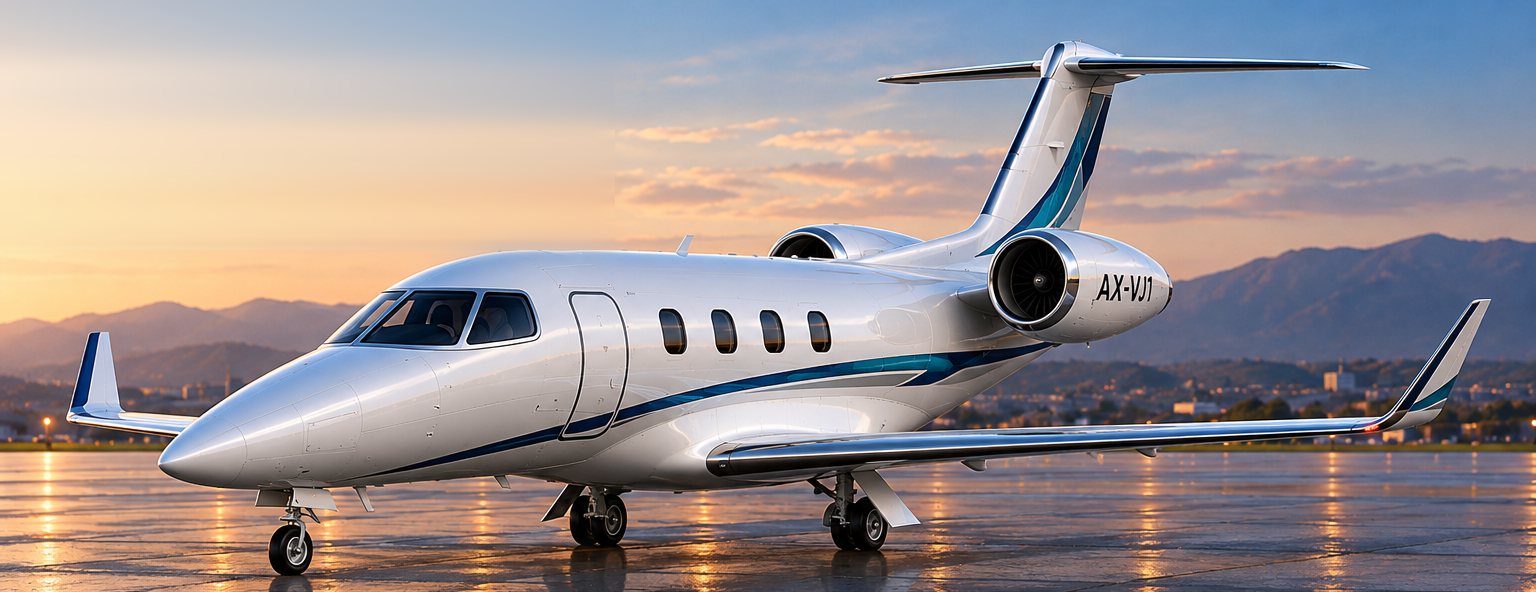
Six-seat single-engine jet

The engine for a six-seat single-engine jet that flies the mission of today’s fast single turboprops, but higher and faster. One engine, installed in the tail, gives the cabin a quiet, clean wing and a simple fuel system.

Single-engine jet+11.5 % climb thrust at FL430Designed for long overhaul intervals
Take-off thrust, sea level ISA
13.5 kN
Max climb thrust at design point
3.39 kN
Design point
FL430 · Mach 0.60
Cruise fuel consumption
20.4 g/kN·s
Bypass ratio, cruise
2.75
Length · envelope diameter
1,820 mm · Ø700 mm
A9-2

Light regional cargo jet

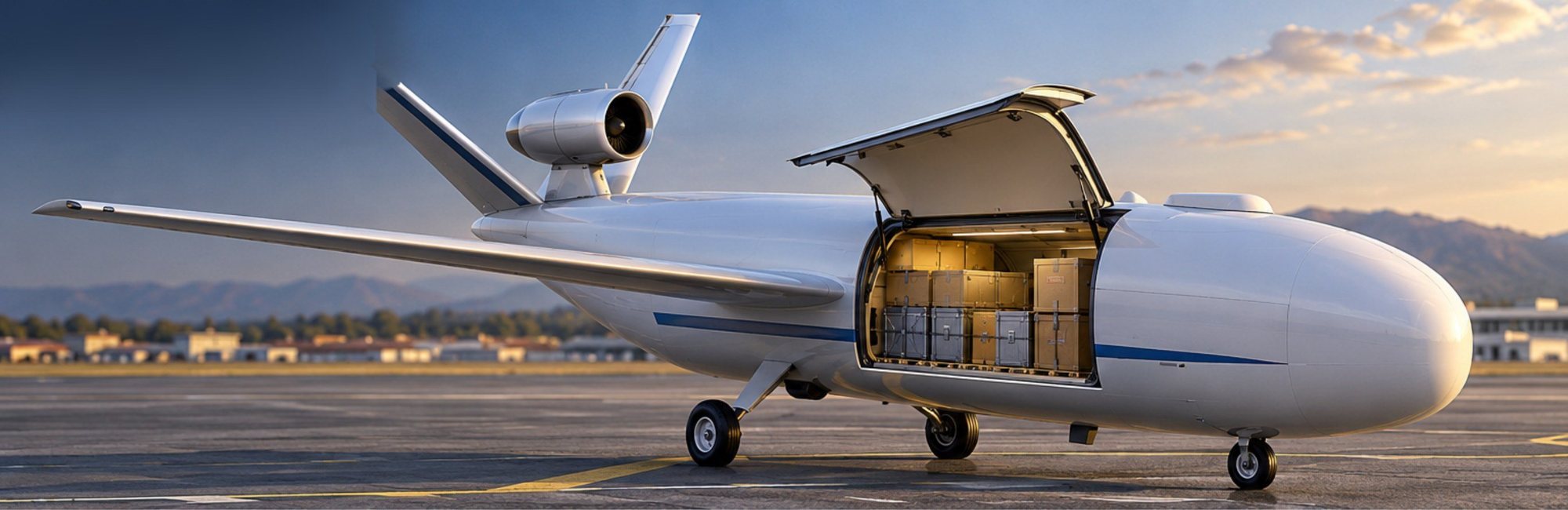
Two A9-2 engines power our light regional freighter, which carries container cargo on short and medium sectors with a single pilot. It has the highest bypass ratio and the lowest cruise fuel consumption of the family.

Lowest cruise fuel of the family−3.8 % cruise fuel vs A9-1Built for night freight
Take-off thrust, sea level ISA
13.7 kN
Max climb thrust at design point
3.36 kN
Design point
FL410 · Mach 0.60
Cruise fuel consumption
17.0 g/kN·s
Bypass ratio, cruise
4.8
Length · nacelle diameter
2,204 mm · Ø812 mm
AFT-2.1

Micro turbofan for long-range cargo drones

A turbofan where a turbojet is used today. Long-range civil cargo drones usually fly on small turbojets, which are light but thirsty, hot and loud. The AFT-2.1 gives turbofan fuel economy in a compact engine, with a cool exhaust that is safe for ground crew and composite structures, electric start and on-board electrical power.

≈ 40 % less mission fuel than a turbojet on 1,500 kmExhaust ≈ 120 °C at take-offCivil cargo drones only
Take-off thrust, sea level ISA
1,643 N
Max continuous thrust, 9 km · Mach 0.6
509 N
Fuel consumption, sea level
13.6 g/kN·s
Cruise fuel consumption, 9 km · Mach 0.6
23.6 g/kN·s
Bypass ratio
7.5
Dry mass (estimate)
≈ 47 kg
Length · nacelle diameter
1,109 mm · Ø404 mm
Electrical power
1.5 kW

Design goals

What every Axiom engine is designed to deliver.

01Thrust where it counts

Every turbofan loses thrust as the air thins. We size our engines for the top of the climb, so the aircraft keeps climbing to its cruise level instead of stalling out in the weather.

02Turboprop-like fuel burn

A light jet that burns far more than a turboprop on the same trip is a hard sell. Our design point is cruise fuel at altitude, not a sea-level brochure figure.

03Short runways

Strong take-off thrust from a compact fan lets the aircraft use the regional airfields that make a small jet worth owning.

04Steady in bad weather

Generous margins against stall and surge from take-off to the top of the climb, and stable running in rain, ice and gusts.

05Low cost of ownership

Fewer parts, easy starts and long intervals between overhauls, with maintenance a regional shop can handle.

06Ready for cleaner fuel

Designed for Jet A-1 and sustainable aviation fuel, with low emissions as a design target from the first cycle study.

Side by side

The family in numbers.

A7.2.1A7.3.2A8-2A9-2AFT-2.1
AircraftTwin light jetHigh-altitude twinSix-seat single jetRegional cargo jetCargo drone
Take-off thrust12.9 kN10.5 kN13.5 kN13.7 kN1.64 kN
Design pointFL450 · M0.65FL450 · M0.65FL430 · M0.60FL410 · M0.609 km · M0.6
Climb thrust at design point2.29 kN2.06 kN3.39 kN3.36 kN0.51 kN
Cruise fuel, g/kN·s23.122.820.417.023.6
Cruise fuel, lb/lbf·h0.8150.8050.7200.5990.833
Bypass ratio1.53.02.754.87.5
Length1,700 mm1,650 mm1,820 mm2,204 mm1,109 mm
DiameterØ520 fanØ599 nacelleØ700 envelopeØ812 nacelleØ404 nacelle
FuelJet A-1 / SAFJet A-1 / SAFJet A-1 / SAFJet A-1 / SAFJet A-1 / JP-8

Preliminary design values, ISA, uninstalled. Cruise fuel consumption is quoted at each engine's own design point, so the values are not a like-for-like ranking. Figures come from Axiom Turbine design models and will change as the designs mature. The engines are not certified.

Cross sections

Inside the family.

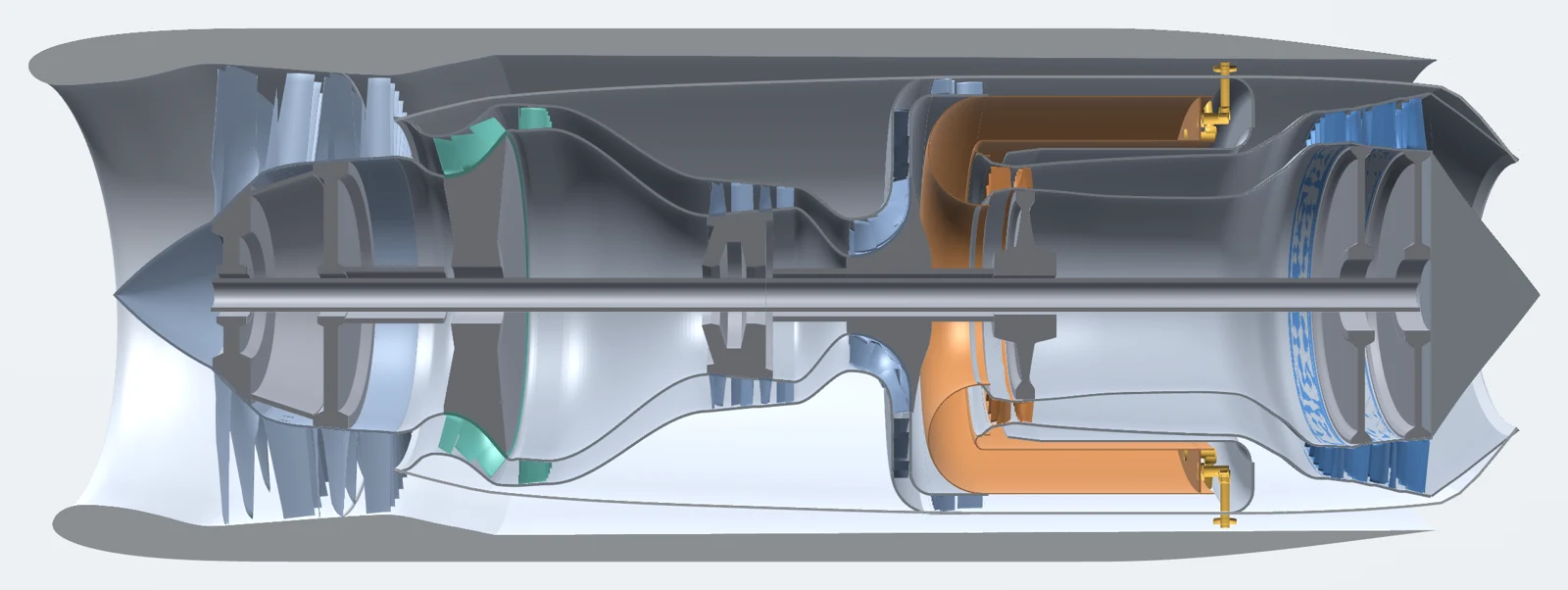
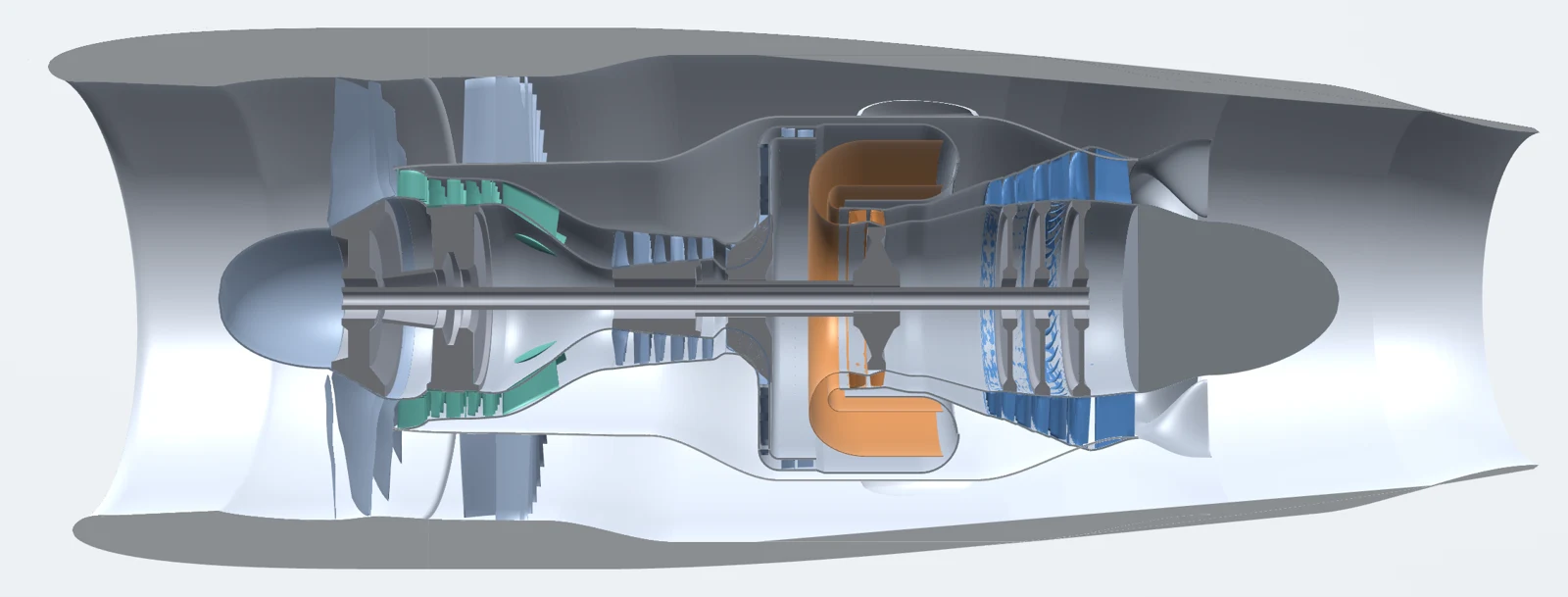
Half cross section of the A7.2.1 turbofan
A7.2.1 · 1,700 mm
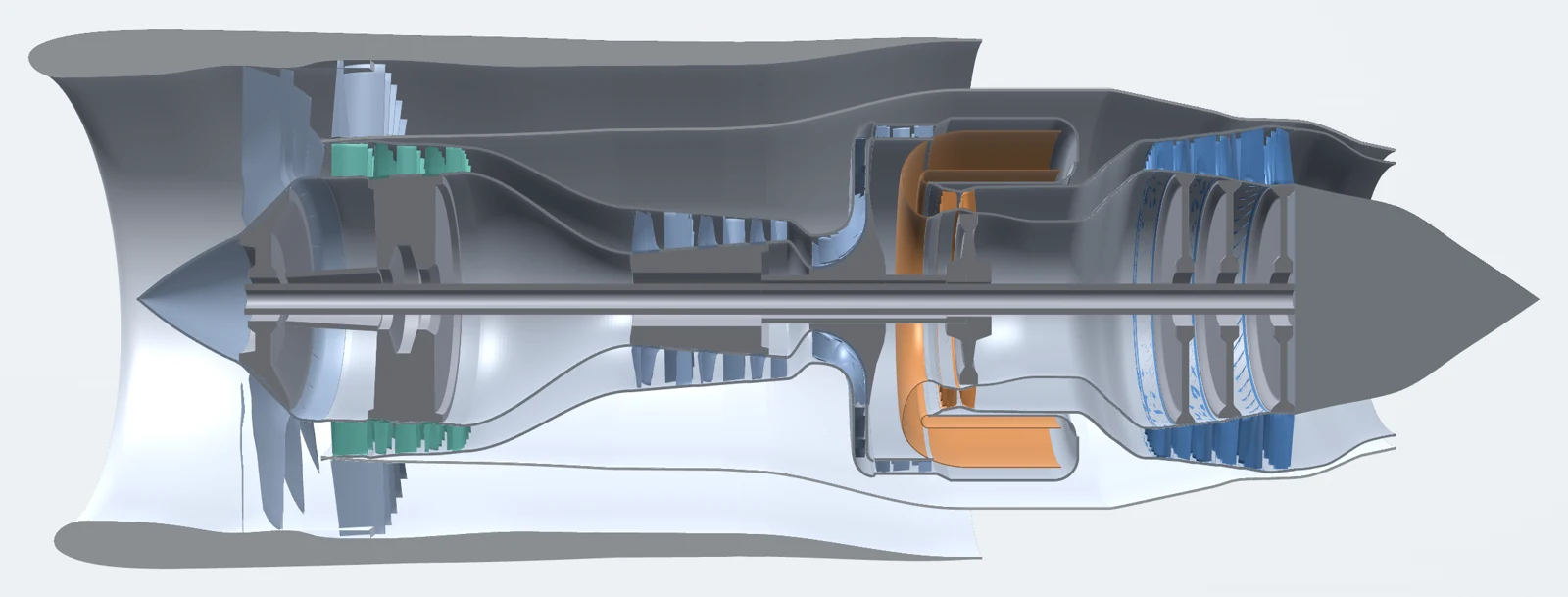
Half cross section of the A7.3.2 turbofan
A7.3.2 · 1,650 mm
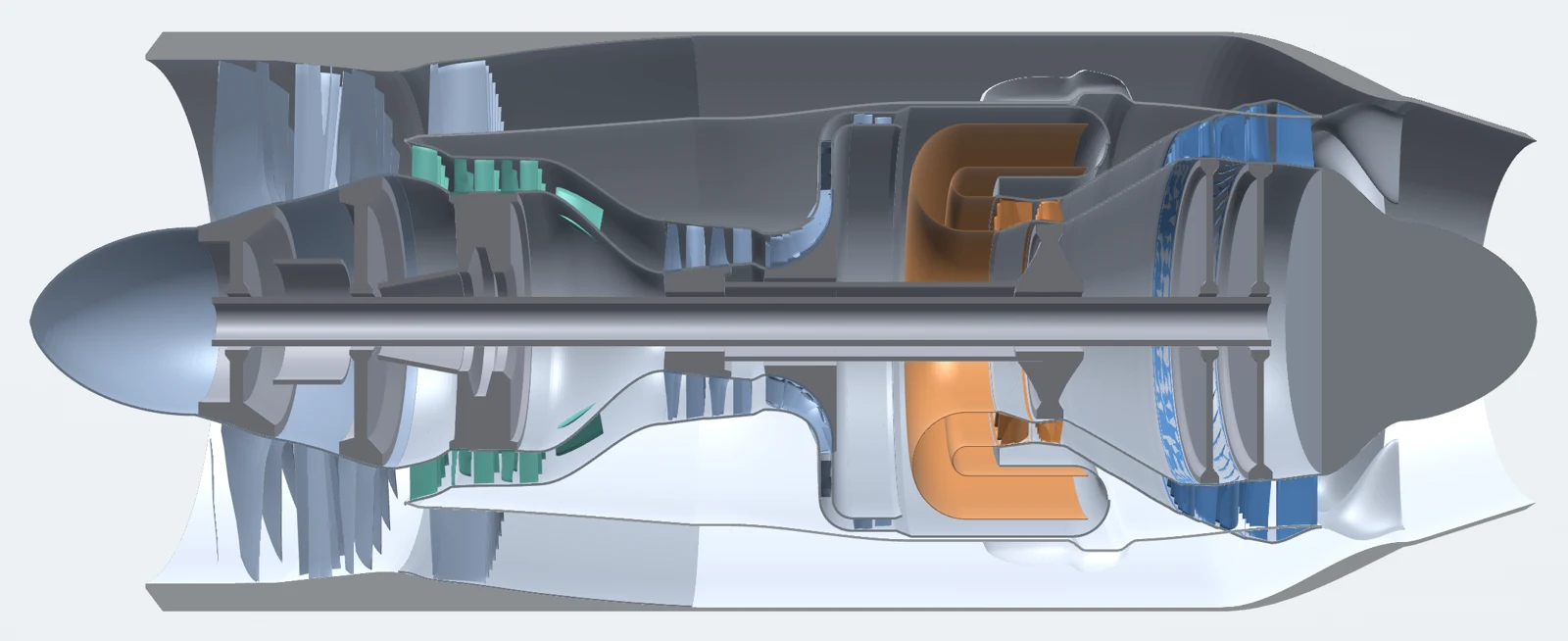
Half cross section of the A8-2 turbofan
A8-2 · 1,820 mm
Half cross section of the A9-2 turbofan
A9-2 · 2,204 mm
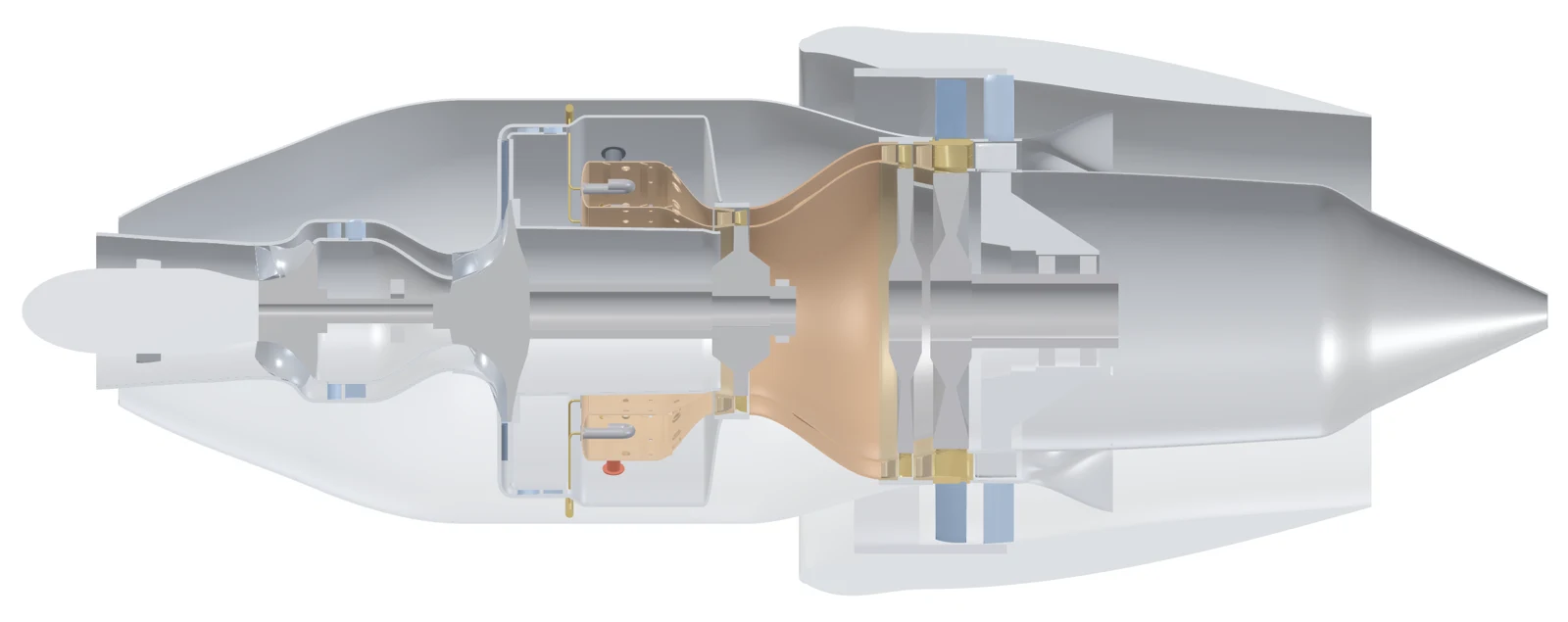
Half cross section of the AFT-2.1 micro turbofan
AFT-2.1 · 1,109 mm

Half sections cut from the 3D design models, flow from left to right, not drawn to a common scale. Illustrations of preliminary designs, not for manufacture.

Programme status

Where the engines are today.

2026 · donePreliminary design

All five engines designed module by module and flown through their missions in our aircraft models. October 2026 issue.

NextDetailed analysis

CFD of the low-pressure module and compressors, structural analysis of the rotors, starting with the A7 engines.

ThenComponent rigs

Fan, compressor and combustor rig tests with our production partners.

LaterDemonstrator

A first engine on the test bed, then integration studies with launch partners.

Technical information

More detail for partners.

Performance decks across the flight envelope, installation drawings, 3D models and design reports are shared with qualified partners under a non-disclosure agreement.

Request information
  1. On this siteApplication, ratings, fuel consumption and size
  2. Under a non-disclosure agreementEngine decks, drawings, 3D models and design reports
  3. After publicationGranted patents and registered designs, listed on our Patents page

Talk to the engine team

Need an engine like these, or a better version of yours?

Tell us the aircraft and the mission.